My Favorite Dog Breed

From athletes to farmers, the Border Collie is a favored dog breed. Originally developed to herd sheep along the border between England and Scotland, it’s an energized and remarkably intelligent workaholic. Also known to be a top dog in agility, flyball, Frisbee, obedience, and sheepdog trials, it’s a highly-trainable companion.
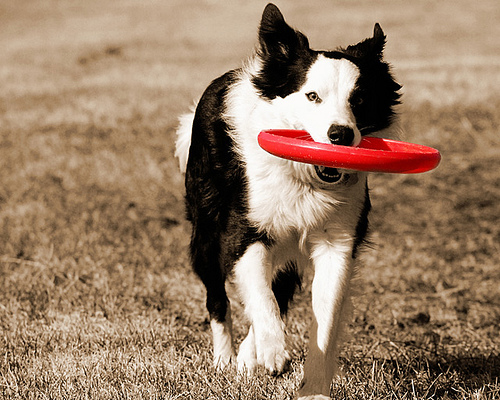
Bred to be on the move, Border Collies should be kept occupied with plenty of exercise. Without activities or a challenge for the mind, this working class pooch can wind up getting into trouble, as it may challenge the authority of its owner.

That said, this smart canine isn’t ideal for someone who isn’t going to keep it active. This breed isn’t recommended for apartment-life or families with small children, since it has strong herding instincts and may try rounding up kids.

With lots of love, exercise, space, and physical and mental activities, the Border Collie will be satisfied. Know that it also requires some brushing, as this breed does shed. On average, it lives 12-15 years and weighs between 25 and 45 pounds.


Snacks That Will Make You Miss The ’90s

DunkAroos – More cookies than frosting, every time. Tasty, but as a kid, I was disappointed when I had to scrape up what was left of the frosting tucked into the corners of the little square to get my fix.

Handi-Snacks – I don’t know about that “real” cheese, but I’d day dream of these things as I waited in the classroom for lunch time.

Gushers – No question about it, these explosive treats were in every kid’s lunch box.

Fruit By The Foot – You always had the longest one, even if you really didn’t. Looks of envy swung your way if you whipped out this edible, artificially flavored rope of plastic.

Fruit Roll Ups – Who didn’t enjoy unraveling these masterpieces to pop out Nickelodeon characters, Sonic the Hedgehog, or some random made-up shape? Unfortunately, there were those who just stuffed them in their mouths without appreciating the designs sketched into them.

Welch’s Fruit Snacks – Bursting with flavor, there were always handfuls to share with the pairs of hungry eyes around you. Always something to marvel at when some of them were stuck together.

Lunchables – Made you feel like you could cook. Lunchables seemed more like real food compared to what the other brown-baggers discovered. There was a moment of pride when you slapped that glossy piece of turkey on that giant cracker and topped it with that overly bright slab of cheese. The half-filled packet of special sauce gave it that extra kick. Read More

Lisa

A feature article I wrote in September 2010 on a journalist I attended SUNY Purchase College with.

Junior journalism major Lisa Eadicicco always had an interest in writing. Her adoration for making stories from the written word stems from her childhood.

“In third grade I’d love when we had to write stories with our vocabulary words for the week,” she said as she flipped her long hair behind her shoulder. “I took a creative writing class in my senior year of high school and I absolutely loved it. It was so much fun,” she said. “We wrote fiction, screen writing, bits of everything.”

She said her interest in music has also been a big inspiration for her writing.

“I played the drums in a band in junior high and I played the guitar as a freshman in high school,” she said with a smile, eyes squinted beneath brown bangs. “I was into magazines like Spin, Rolling Stone, Alternative Press.  I’d love to write for them,” she said. “Now that I’m really into journalism, I’d write for any publication.”

Eadicicco said when she first got into journalism, she wasn’t sure what to expect, but decided to major in it because she liked to write. “In journalism, it’s all about the hard facts and to me that’s interesting,” she said.

Read More

Mikey

A feature article I wrote in September 2010 on a musician I attended SUNY Purchase College with.

Singer-songwriter, Mikey Ballou, a junior composition major from Westchester, looks up in thought. His bleached blonde hair dangles over his eyebrows.

“Flexibility is important,” he says. “The music conservatory here offers more flexibility than most programs in other colleges. I don’t want to be limited to playing one instrument. I want to be in the studio and I want to record every instrument.”

He shakes his head and the hair over his eyes moves to one side. “I can network here. It’s nice to be in an environment where there aren’t 800 other musicians. Competition isn’t magnified as much.”

Ballou says he was exposed to music since he was a baby. He gives credit to his father, a professional musician, who he says he got his ears from. He considers himself independent from his father but it wasn’t always that way.

“My dad forced music on me ever since I was a kid and it sucked for the first few years. I wasn’t interested.” Read More

The History of Pimm’s No.1 Cup

 An article I wrote for Chilled Magazine. I just finished and submitted it today. If anyone has any feedback or information, please leave a comment!

Pimm’s No. 1 Cup was invented by James Pimm, the owner of a London oyster bar, in the early 1840s. The thirst-quenching drink is based on gin with a mixture of herbs and fruit extracts. The original recipe included quinine because of its medicinal qualities. Pimm originally served his brew as a digestive aid in a small tankard called the No.1 cup, hence the name, “Pimm’s No. 1 Cup.” The drink was a big hit, so Pimm expanded his business to sell it by the bottle to other taverns.

Pimm built a chain of restaurants in many locations, including The Old Bailey and other places that businessmen would likely come across. By 1859, Pimm’s No. 1 Cup was on sale outside of his restaurants. Years later, Pimm sold his tonic drink business because the rights to it ended up with the Lord Mayor of London, Sir Horatio David Davies. It was Davies who made the drink fashionable, particularly amongst the military, because of his connection with London Society.

It was after the Second World War that Pimm’s expanded their range. They began using a number of different spirits as bases for cups. Pimm’s No. 2 Cup was scotch-based while No. 3 used brandy, No. 4 rum, No. 5 rye and No. 6 vodka. The vodka cup and brandy cup are the only ones still in production out of the sequels. The original No. 1 Cup is still very popular. It is often thought of as the number two English drink (tea being the first). The gin-based beverage is downed by the gallon in England during the summer months, especially during sporting events like the tennis tournament, Wimbledon Fortnight and the rowing event, Henley Royal Regatta. The first Pimm’s bar opened at the 1971 Wimbledon tournament, where over 80,000 pints of Pimm’s and lemonade continue to be sold each year. Read More

35 Things I’m Inspired By

I can go on and on, but below are some things that come to mind when thinking about who and what I’m inspired by. I wrote this list in no particular order. I’ve read some other lists and it really says a lot about who you are. Definitely give it a try.

1. Travel writers/journalists

2. Listening to the memories of elderly people

3. People who love animals

4. Documentaries about animals, nature, science, or history

5. Runners

6. Paintings

7. Knitting

8. Open mic poetry readings

9. Musicians who write and perform their music

10. The sun rising or setting over the ocean

11. Finding shapes in the clouds

12. People who find the light in tough situations

13. Cleverness

14. Those who give just because they want to Read More

What Should I Eat After A Run?

Ever since I began running a few years ago, I’ve become more health conscious than ever and aware of what my body needs. Though I’ve been trying to change it,  I’m a picky eater. I’ll admit it. This is especially true after coming in from a run. I want to nourish my body. I’ve done plenty of research on which foods I should consume after running, and it’s really not difficult. All you have to do is listen to your body. You want to replenish your energy as quickly as possible. What I crave most after a run are carbohydrates and protein.

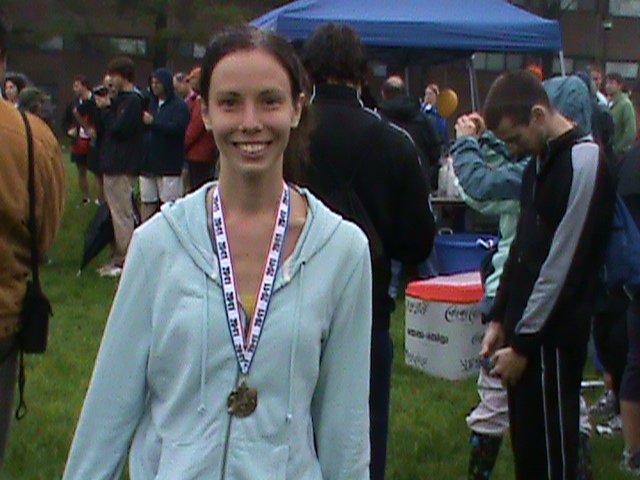
After my first 5K in May 2011.

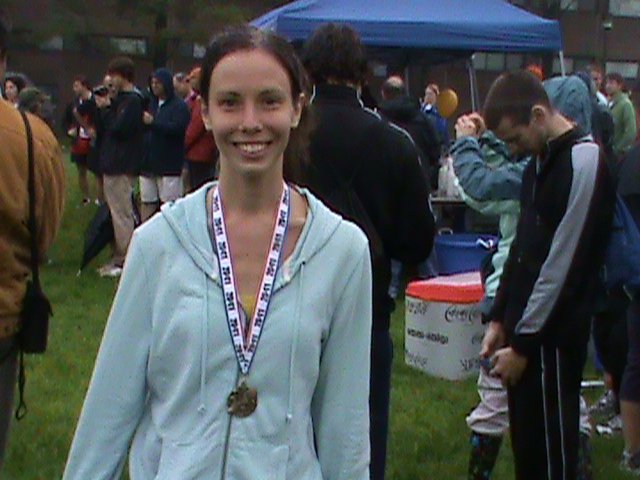
After my first 5K in May 2011.

I’ve learned that after a long run, the focus of your next meal should be glycogen replacement. Glycogen, a type of carbohydrate, is stored in your muscles. You reach the exhausting point when you know you can’t continue when your body is low on glycogen. Many runners consume carbohydrates to build up glycogen.

Through research, I’ve found that glycogen should be restored a half hour after running because, according to numerous studies, that is when the body is most efficient at using carbohydrates to produce glycogen for the muscles.

So, after a run, you want carbohydrates in your next meal. Foods containing carbohydrates are pasta, potatoes, rice, bread, and vegetables. Eating protein with carbohydrates stimulates glycogen replacement. Foods high in protein include beef, beans, cheeses, pumpkin seeds, lean meats like chicken and pork, fish, eggs, lentils, and peanuts. Also make sure to drink plenty of water to rehydrate your body.