Carbon Monoxide Evacuation

An article I put together from a make believe press conference when I attended SUNY Purchase.

Fifty people evacuated their apartment building early yesterday morning, many of them barefoot and in their pajamas. Some of them were carried out, dangling over the shoulders of firefighters. Residents soon learned that carbon monoxide was detected throughout their building.

Tanya Jones, 27, was one of the 50 who lived in the apartment building on East 12th Street in the East Village. She lived on the fourth floor and was woken up around 5:15 am to the sounds of screaming and men’s voices. She went into the hallway to investigate, where she passed out in her neighbor’s doorway.

“I woke up at about 4:00 in the morning with a splitting headache,” Jones says. “I thought it was just the stress of my job and I went back to sleep. Then the next thing I knew, I heard crying and screams in the hallway, and I thought ‘Just another day in New York City,’” she says. “Then I heard screams and men’s voices. That’s when I realized something was wrong. I  looked at my alarm clock and I realized that I slept through my alarm.” She takes a breath. “I thought to myself, ‘I need to investigate.’ I got out of bed, my knees buckled beneath me and I hit the ground.” Read More
Teacher Acts Like A Chicken

An article I put together from a make believe press conference when I attended SUNY Purchase. Based on true events.

According to a class of eighth grade students, their teacher, Eva Brady, was behaving oddly during class time and acting like a chicken.

On March 24th, Brady, 47, was driven home from Pentucket Regional Middle School by a colleague after her history class told administrators that there was something “wrong” with their teacher.

It was 10:00 a.m. on March 24th when additional information was given from Chief Holmes and Officer Forni regarding the incident at the school. Holmes said that she had information from the Groveland Police and one of their employees that Brady asked a student in her class how he thought it would feel to have a bullet in his head. The student confirmed the question with Assistant Principal Ken Kelley.

According to Forni, students told him that Brady was in the back of the classroom flapping her arms, making chicken noises and trying to fly. These allegations were not confirmed during the school’s investigation.

“Ms. Brady has worked in the district for the last five years without incident and has denied the incident,” said Principal Debra J. Lay. “After an investigation by our school board, we are inclined to dismiss the accusation and welcome Ms. Brady back to the classroom.”

When parent Tracy Dalton picked up her son and his friends from the school, they reported the “bullet” incident and Brady’s other odd behaviors. Dalton reported information to parents of involved students and also to the school on March 24th.

On March 25th, the school was still investigating the incident and talking to students.

According to Kelley, the student involved in the “bullet” incident said that Brady had asked him to teach the class. He said that though “she was acting strangely,” he was not afraid of her or her comments to him.

On March 26th, Officer Michael Dwyer contacted the father of the student, who said he was satisfied with the handling of the issue and did not want anything to go forward as far as charges.

I hate “Kk”

My friends say it, your friends say it. You’ve probably said it too.

“Kk.”

Being a complete grammar geek, this peculiar acronym annoys me to no end. After I read a text from my boyfriend saying “Kk” last night, I had enough. It was time for a serious, serious talk. But that’s a different story.

I began researching as much as I could about this “Kk” that gets around everywhere, creeping into phones, emails and online communities across the globe, hypnotizing its readers to spread it so it can conquer the precious, well thought out English language, with its growing number of similar lazy buddies who want nothing more than to get around.

But where did “Kk” come from? I can’t pinpoint an exact mastermind or location, but I’ve done some digging.

The double K means the message has been acknowledged. I know that and I’m sure you do too. But why not just write “Ok” in the first place? You’d still be using two letters. Originally, it didn’t just mean “Ok.” “Kk” came from, “k, kewl,” translating to “Ok, cool.” I’ve never heard anyone say “Kk” in person, except when reading a text message out loud. Even then, it sounds beyond stupid. It is stupid. It’s an acronym for two words that are misspelled and conjoined. It makes my head sick. It makes me lose hope for the human being.

Conversations like the following wouldn’t be said like this in person.

“hi how ru i just ate a corn dog”

“lool kk im good cant complain hbu”

Read that aloud. What a catastrophe.

Through research, I discovered that “Kk” was born in the 1990s. Not surprising, with the Internet really growing up back then. It’s part of online/texting conversation culture and was first used in online communities, not texting, as many would now assume.

The younger generations especially use “Kk” without knowing what it means. They think it means “Ok” and they use it that way, when it really stands for “k kewl” (Okay, cool). So, if you think about it, a conversation like the one below would be messed up.

“i cant make it tonight i gotta go to my grandpas wake”

“kk im sry”

These things happen. This also reminds me how many things are so impersonal now. I love technology, but sometimes I feel that the younger people in this world aren’t going to know how to properly communicate, especially face to face. The ways of the future interest me.

So, those are some of my thoughts and facts on the subject.

Okay, cool.

Green Bride Guide

An article I wrote for Chilled Magazine.

Green mixologist, Kate Harrison, provides eco-friendly drinks for brides.  She planned her own green wedding in 2007 and founded greenbrideguide.com two years later. Her goal is to help couples use their weddings to promote social and environmental change, as well as support the local organic economy.

The inspiration for the guide sparked from Kate’s engagement. She and her husband Barry got engaged in 2007 when they were both in graduate school at the Yale School of Forestry and Environmental Studies.

“We were trying to plan a beautiful budget-friendly event that was in line with our values and beliefs and I thought it was much harder to find the resources we needed than it should have been,” said Kate. “I wrote The Green Bride Guide: How to Plan an Earth-friendly Wedding on Any Budget to help other brides navigate the process.”  Kate launched greenbrideguide.com after her book became a best-seller in the wedding planning category. Read More

The History of the White Russian

An article I wrote for Chilled Magazine.

Made with vodka, coffee liqueur, cream, and served over ice in an Old-Fashioned glass, the White Russian is a sweet and simple cocktail enjoyed by people who drink often and those who rarely do.

The White Russian was originally a variation of another vodka drink that first became known in the late 1940s as the Black Russian. It became a White Russian with the addition of cream. Neither drink originated in Russia, but both are named due to vodka being the primary component. It is said that the Black Russian originated in Brussels, Belgium.

Its potency and smooth flavor was most likely the cause of the White Russian’s quick rise to popularity, along with the fact that it’s easy to make. It was a top pick for both alcoholics and beginners in the 1970s, but fizzed out with the rest of the disco fads. Years later, the cocktail regained popularity in the 1998 film, The Big Lebowski by being a favorite of the movie’s protagonist, Jeffrey “The Dude” Lebowski, played by Jeff Bridges. America’s restored appreciation for coffee may also be bringing the White Russian back into style.

Read More

Lisa

A feature article I wrote in September 2010 on a journalist I attended SUNY Purchase College with.

Junior journalism major Lisa Eadicicco always had an interest in writing. Her adoration for making stories from the written word stems from her childhood.

“In third grade I’d love when we had to write stories with our vocabulary words for the week,” she said as she flipped her long hair behind her shoulder. “I took a creative writing class in my senior year of high school and I absolutely loved it. It was so much fun,” she said. “We wrote fiction, screen writing, bits of everything.”

She said her interest in music has also been a big inspiration for her writing.

“I played the drums in a band in junior high and I played the guitar as a freshman in high school,” she said with a smile, eyes squinted beneath brown bangs. “I was into magazines like Spin, Rolling Stone, Alternative Press.  I’d love to write for them,” she said. “Now that I’m really into journalism, I’d write for any publication.”

Eadicicco said when she first got into journalism, she wasn’t sure what to expect, but decided to major in it because she liked to write. “In journalism, it’s all about the hard facts and to me that’s interesting,” she said.

Read More

Mikey

A feature article I wrote in September 2010 on a musician I attended SUNY Purchase College with.

Singer-songwriter, Mikey Ballou, a junior composition major from Westchester, looks up in thought. His bleached blonde hair dangles over his eyebrows.

“Flexibility is important,” he says. “The music conservatory here offers more flexibility than most programs in other colleges. I don’t want to be limited to playing one instrument. I want to be in the studio and I want to record every instrument.”

He shakes his head and the hair over his eyes moves to one side. “I can network here. It’s nice to be in an environment where there aren’t 800 other musicians. Competition isn’t magnified as much.”

Ballou says he was exposed to music since he was a baby. He gives credit to his father, a professional musician, who he says he got his ears from. He considers himself independent from his father but it wasn’t always that way.

“My dad forced music on me ever since I was a kid and it sucked for the first few years. I wasn’t interested.” Read More

The History of Pimm’s No.1 Cup

 An article I wrote for Chilled Magazine. I just finished and submitted it today. If anyone has any feedback or information, please leave a comment!

Pimm’s No. 1 Cup was invented by James Pimm, the owner of a London oyster bar, in the early 1840s. The thirst-quenching drink is based on gin with a mixture of herbs and fruit extracts. The original recipe included quinine because of its medicinal qualities. Pimm originally served his brew as a digestive aid in a small tankard called the No.1 cup, hence the name, “Pimm’s No. 1 Cup.” The drink was a big hit, so Pimm expanded his business to sell it by the bottle to other taverns.

Pimm built a chain of restaurants in many locations, including The Old Bailey and other places that businessmen would likely come across. By 1859, Pimm’s No. 1 Cup was on sale outside of his restaurants. Years later, Pimm sold his tonic drink business because the rights to it ended up with the Lord Mayor of London, Sir Horatio David Davies. It was Davies who made the drink fashionable, particularly amongst the military, because of his connection with London Society.

It was after the Second World War that Pimm’s expanded their range. They began using a number of different spirits as bases for cups. Pimm’s No. 2 Cup was scotch-based while No. 3 used brandy, No. 4 rum, No. 5 rye and No. 6 vodka. The vodka cup and brandy cup are the only ones still in production out of the sequels. The original No. 1 Cup is still very popular. It is often thought of as the number two English drink (tea being the first). The gin-based beverage is downed by the gallon in England during the summer months, especially during sporting events like the tennis tournament, Wimbledon Fortnight and the rowing event, Henley Royal Regatta. The first Pimm’s bar opened at the 1971 Wimbledon tournament, where over 80,000 pints of Pimm’s and lemonade continue to be sold each year. Read More

What Should I Eat After A Run?

Ever since I began running a few years ago, I’ve become more health conscious than ever and aware of what my body needs. Though I’ve been trying to change it,  I’m a picky eater. I’ll admit it. This is especially true after coming in from a run. I want to nourish my body. I’ve done plenty of research on which foods I should consume after running, and it’s really not difficult. All you have to do is listen to your body. You want to replenish your energy as quickly as possible. What I crave most after a run are carbohydrates and protein.

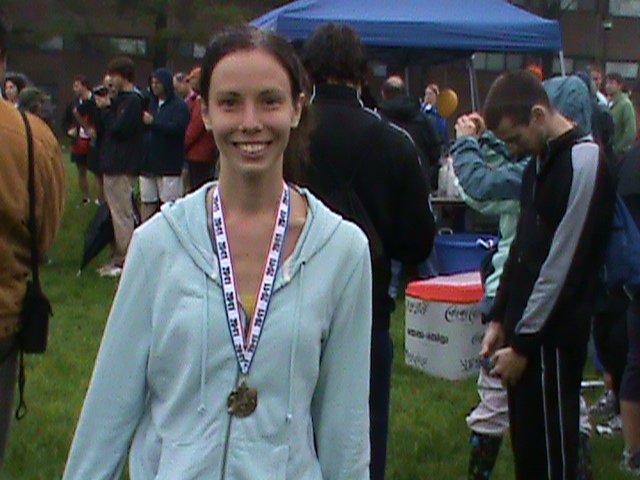
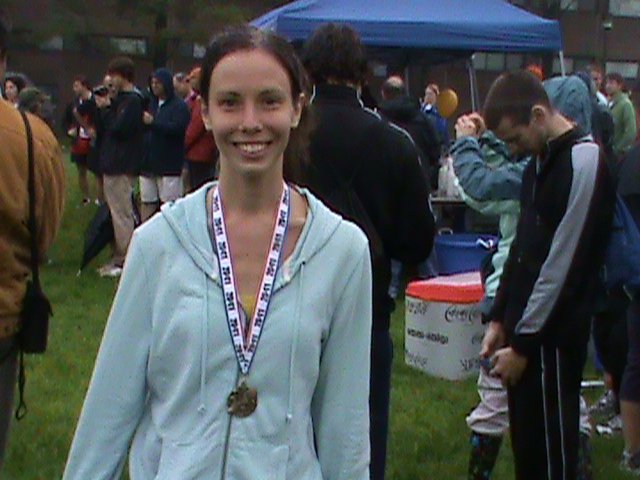
After my first 5K in May 2011.

After my first 5K in May 2011.

I’ve learned that after a long run, the focus of your next meal should be glycogen replacement. Glycogen, a type of carbohydrate, is stored in your muscles. You reach the exhausting point when you know you can’t continue when your body is low on glycogen. Many runners consume carbohydrates to build up glycogen.

Through research, I’ve found that glycogen should be restored a half hour after running because, according to numerous studies, that is when the body is most efficient at using carbohydrates to produce glycogen for the muscles.

So, after a run, you want carbohydrates in your next meal. Foods containing carbohydrates are pasta, potatoes, rice, bread, and vegetables. Eating protein with carbohydrates stimulates glycogen replacement. Foods high in protein include beef, beans, cheeses, pumpkin seeds, lean meats like chicken and pork, fish, eggs, lentils, and peanuts. Also make sure to drink plenty of water to rehydrate your body.

The Nico Blues Heat Up The Vibe Lounge

An article I wrote for SpotonLI.com.

The Nico Blues, an alternative rock band from New Jersey, heated up The Vibe Lounge in Rockville Centre Friday night. They pulled in a crowd of a variety of ages.

The band is made up of Eric Goldberg and Evan Campbell, both vocalists, guitarists, and bassists, Reed Adler, guitarist and bassist, Skylar Adler, drummer and recording engineer, and Dan Goldberg, guitarist. The guys rotate instruments depending on which song they play. The band was founded in 2009, but they have been sharing and writing music with each other for years. Growing up in the same neighborhood, the five of them were friends by the time they were six and seven years old.

The Nico Blues played six of their songs Friday night, opening with “Mugshot In Princeton,” which is on their upcoming EP, followed by “Living Proof,” which the band considers to be their most successful song. The video for “Living Proof” was picked up by MTVU. The audience rocked their bodies and tossed their heads to the intense harmony, wearing stickers on their clothing the band handed out before the show. Read More